Another letter to the editor which highlighted the RM15 fare charged by a taxi driver for a ride between the Central Market to the Methodist Boys’ School at Jalan Hang Jebat.
Where are the SPAD officers?
I REFER to “RM40 for short taxi ride” (Letters, July 18). Living and working in the heart of Kuala Lumpur, it is more like a miracle when I come across a taxi driver who uses the meter. A few weeks ago, I wanted to take a taxi from the bus stop in front of Central Market to the Methodist Boys’ School at Jalan Hang Jebat. It would have been a 20-minute walk uphill but I was tired.
The first taxi driver I approached rejected me, saying that he didn’t want to go through a jam. The second driver said that he was not planning to go to that area. The third driver said he would take me there for RM20. I thought I had no choice.
I bargained with him and brought the fare down to RM15. The ride through the clear road took five minutes. I had to spend almost 10 minutes to get a taxi and bargain over the fare for a five-minute ride.
Taxi drivers seem to have a pact. The first two in the queue rejected me and I was left with no choice but to accept the third driver’s terms. This is like bullying.
RoshMuni
Kuala Lumpur
Saturday, July 21, 2012

SPAD Officers - Where are you? (1)
This is a letter to the editor of the Sun daily newspaper highlighting the RM40 charged by a taxi driver for the ride between Pavilion, Bukit Bintang to a hotel in Pudu:
RM40 for a short taxi ride
MY parents came to KL for a holiday and I took them to Pavilion KL to shop and have dinner. As they are elderly and unable to walk a long distance, we decided to take a taxi from the shopping mall back to their hotel in Pudu.
It's a short distance from Bukit Bintang to Pudu but the cabbie insisted on charging RM40. It sickened me but we had no choice.
KL cabbies have given the city a bad image, openly fleecing Malaysians and foreigners alike. The authorities should act fast and not continue to turn a blind eye.
This is bad for tourism, bad for Kuala Lumpur, and bad for Pavilion KL.
BL
Penang
RM40 for a short taxi ride
MY parents came to KL for a holiday and I took them to Pavilion KL to shop and have dinner. As they are elderly and unable to walk a long distance, we decided to take a taxi from the shopping mall back to their hotel in Pudu.
It's a short distance from Bukit Bintang to Pudu but the cabbie insisted on charging RM40. It sickened me but we had no choice.
KL cabbies have given the city a bad image, openly fleecing Malaysians and foreigners alike. The authorities should act fast and not continue to turn a blind eye.
This is bad for tourism, bad for Kuala Lumpur, and bad for Pavilion KL.
BL
Penang
Tuesday, July 17, 2012
The "helpful" Malaysian - an endangered species

I'm still perplexed on the reasons why Malaysians have come to this “helpful” stage. Parents countrywide seem to go overboard giving the best that money can buy to ensure that their children are not deprived of the latest in their physical, mental and emotional development.
At first glance that should be enough preparation to give the child a head start and grow up being a responsible and caring adult. Responsible maybe but the caring part is a bit difficult. That part comes from examples set by the adults and practical lessons since young.
The nuclear family is becoming the norm with both parents working and the child left in someone else's care. The time spent with the child has become less and exposure to others in an extended family is rare. Meanwhile, neighbours barely acknowledge each other as time is money and each of us are in such a hurry to accumulate as much wealth as possible.
When would be the time for the child to observe and absorb that caring trait. Most probably from the mass media, the television, cinema and internet. All those flickering images, at most for about two hours are still images.
The reality is different. Has the child ever been thought to give precedence to those less fortunate? The aged or disabled? As far as I can see, most parents just tug the child away from this group of people so as to avoid any close contact. Those less fortunate are an anomaly to be cast away from the utopian view of a perfect world.
They might be willing to visit an old folks home or an orphanage during certain occasions but in their daily lives, the less fortunate are not in their world view. Images of poverty or hunger have become so common, that we have become immune and unable to relate to them. We switch to the denial mode.
We have not been thought how to react and show empathy or be compassionate when the situation warrants it. We can have as many lessons in school or at home but when we avoid giving that helping hand in real life, the “helpful” Malaysian comes to the fore.
Image from teamsnap
Monday, July 16, 2012
Pregnant lady kept standing

The lady in the letter to the editor was seven months pregnant and was attending an investment seminar where she assumed the audience to be at least more enlightened on the predicaments of a pregnant woman. That was not to be.
She mentioned that “All attendees were educated and I would say were mostly highly educated and yet there was no compassion and human values.”
Yes, that is the crux of the matter. Compassion and human values are becoming less common compared to the pursuit of material wealth. A pregnant lady? Is that any concern of others?
I guess many have forgotten all of us have mothers and they did carry us in their wombs for nine months. Can't we forget for a moment our own tiredness and give up that seat for the pregnant lady.
I don't have an answer on how to change this attitude of being uncaring to those in need. Education has always been held as the answer but as the lady said, she believed that those attending the event were educated. In that case, those in that room would be able to think and have some common sense and empathy for a pregnant lady. That did not happen.
Will it ever change? If the educated themselves do not lend a hand to those in need, there must be something wrong with the education that they received. A revamp is needed on what we teach our children. The emphasis should not be just that string of As, but also the human values and compassion necessary as member of a society. The moral or religious education classes might help but the adults' examples at home and in society at large is a great influence.
A change in the mind-set is needed or else the children will definitely grow up to be uncaring adults.
The letter in full:
I AM about seven months pregnant. I attended “Invest Malaysia 2012” which was held in Shangri-la recently.
I made the trip as I was interested to listen to our Prime Minister speak on “Capitalise on Asean’s multinational marketplace”.
The event was attended mostly by professionals or working people in the investment community.
I could not find a seat and it was just too crowded. I stood near all the seated attendees for almost half-an-hour (near the side entrance), hoping that someone would be kind enough to offer me a seat.
Unfortunately, no one volunteered.
As I could not stand any longer with my big belly, I left the event after half-an-hour. It was painful to think how our society has changed.
All attendees were educated and I would say were mostly highly educated and yet there was no compassaion and human values.
I guess perhaps it is time that our Government does something, e.g. emphasise more on moral values in our education system or to do some activities that encourage people to be more compassionate and courteous in treating others, especially the weaker ones.
All these can be done through the media and education system and it has to start from young.
TAN PM
Kuala Lumpur
Image from babytidings
Sunday, July 15, 2012
The police should be the "mata-mata" again

At the moment we see quite a few pondok polis in our neighbourhoods and we notice some policemen making their rounds on their motorcycles or cars. The ones on foot are not common.
I've only seen some at the Bukit Bintang shopping area and their presence does make us feel more secure. They seem approachable and always willing to give a helping hand. A positive image indeed. Nevertheless, the police beat base is still relevant as the most convenient one stop centre to ask questions or make reports.
Unfortunately the police force would not be able to accommodate all areas that need them. That would require more manpower which we could ill afford as their job is not just to patrol a certain area. Random walkabouts would be most welcomed and at least they will be able to get feedback on what is happening on the ground.
Once upon a time the police were also called “mata-mata”, literally the eyes. They can be seen making their rounds and was a part of the community. Children were even cautioned by their parents that the mata-mata will catch them if they misbehave. That threat is so old-fashioned and no longer carries any weight in this time and age.
The mata-mata is not in our midst any more so we are unable to have that emotional link with the police force. They are not just there to help us during troubled times but can be a dependable friend at other times as well.
The police should embrace the mata-mata spirit again and become our friend, a part of us.
Image from oldman40k2003
Thursday, July 12, 2012
More employment means less crime

We are just talking about the numerous snatch thefts and break-ins that are reported daily in the media. These are preventable if everyone has an equal opportunity to have a decent wage instead of being sidelined by employers.
The official statistics might show the country has achieved almost full employment but more often than not ordinary folks are struggling to make ends meet especially those living in urban areas. The subsidies do help but it does not solve the basic problem of low wages compared to high daily living expenses.
The worst affected group are those ignored by employers even for menial jobs. They are the most likely candidate to try their hand at making a living from crime. The spate of physical attacks on the victims is a symptom of desperation to get whatever they can at whatever cost.
They have lost all considerations for the targeted victims as their main aim and ultimate goal is to get that handbag or anything of value on that person. The victim's struggle is a normal reaction from anyone who has been surprised by an attack. Unfortunately the more the victim struggles, the more hard hearted and determined the robber would be. He changes to a totally different person in a split second and the victim gets the brunt of his outburst.
Yes, employment would definitely give at least some hope to those in dire situations. They would at least be assured that they will be able to afford their daily meals. Sad to say but employment would not be the solution to white collar crimes. That is another story.
Image from jonpackapproves
Tuesday, July 10, 2012
Malaysian taxi drivers must use the meter
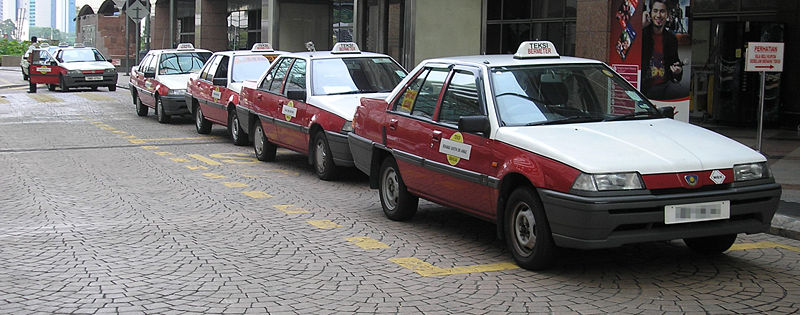
The heading in the letter to the editor says it all, “Start by insisting they all use meters”. All the subsidies that are given to the taxi operators whether it is the fuel subsidy or recently launched tire subsidy would not make a dent in improving the taxi services in this country unless and until all taxis use meters.
I'll quote some paragraphs that I like:
“In Kuala Lumpur, the taxis have meters and display signs on the doors about "no haggling" but it's all "face" as most taxis refuse to turn the meter on.” This is so so true.
“The driver usually starts quoting a fixed fare of twice the normal amount "because of heavy traffic" or "because it's raining" etc. The abuse of the system is endemic.” Most often that not even if there is no heavy traffic and the sun is shining brightly, the taxi drivers will still pick and choose whether they want to take the passengers.
“Compare the situation here with that in Bangkok, Manila and Jakarta. In all these cities, the drivers turn on the meter without question and rarely try to cheat.” I have not been to Manila but I can vouch that in the other two cities which has a bigger population and worse traffic condition that in any city in Malaysia, the taxi drivers automatically use the meter, come rain or shine, irrespective of the traffic conditions.
“I may be wrong, but I don't think the tourism minister or SPAD chairman had ever tried to hail a taxi in the street. If they did, they would see a different reality.” I would like to give the benefit of the doubt here. Yes, maybe the tourism minister or SPAD chairman had tried hailing a taxi in the street just like the rest of us. At the moment both of them might be working diligently trying to find a solution to the perennial bad image of our taxi services. I am hoping and praying that they really did hail a taxi in the street and had the same experience as the public.
I just love the last paragraph:
“Perhaps the way to start is to go to Bangkok and find out how the system there works and why in Malaysia it is horribly broken.” Of course I'm biased, since every visit to Bangkok has been pleasant, and even during the period when they had different factions fighting to be the ruling government, the taxi drivers will still take you to your destination using the meter.
The key point has to be emphasised again: Malaysian taxi drivers must use the meter.
Image from killingtimewithijahamran
Monday, July 09, 2012
The staircase at KL Sentral station

I could not agree more with the
sentiments in the letter to the editor which highlighted the pasar
malam atmosphere at the KL Sentral station. The letter mentioned the
rows of temporary kiosks filling the concourse area at Level 1 which
not only obstructs the flow of commuters using the station, it is
also a definite hazard in times of emergency. The huge signage for
the other conncting modes of transport are also hidden by some of the
kiosks.
I feel one of the major flaws of the
station is the exit for passengers going to Jalan Tun Sambanthan. I'm
not sure why there is only one staircase and an elevator catering to
the thousands who use that route daily.
The station was originally planned
without the buses waiting at the ground level. That in itself should
not have been the reason for having only one staircase for a central
station. At present I can see work being done to have a bridge to the
next station. When it is completed we still have just one staircase
to go to the ground floor if we want to take the bus to the airport
or taxis to other parts of the city.
I do wonder how the architect
envisioned the whole KL Sentral complex. Was that one staircase not
to be used at all? If that is the case, pedestrians would use the
road meant for motor vehicles which goes downwards to Jalan Tun
Sambanthan.
I am a pedestrian and having that one
staircase has always been the bane of any visit to KL Sentral. At
least I can still walk but I can see the disappointed faces of those
with problems when they see that staircase.
That staircase deserves the accolade of
being the most unfriendly path at a public building in Kuala Lumpur.
Image from wikipedia
Sunday, July 08, 2012
Air Asia's female pilots

I've always had a love hate
relationship with AirAsia from day one due to the numerous flight
delays during the early days and now the not so friendly booking
online system. They deserve a pat on the back nevertheless for their
equal opportunity policy in terms of employment.
This fact is highlighted in the article
on female pilots working with the airline. AirAsia currently has 21
female pilots. Twelve of them fly with AirAsia operating the Airbus
A320 while the remainder fly for AirAsiaX, operating the Airbus A330.
According to one of the pilots interviewed, she even had the
experience of being on a flight manned by an all female crew. Now,
can anything beat that?
I do wish other organisations can take
a leaf from AirAsia and give equal opportunity to the females in
their fold. It is a waste of talent and resources if a woman is
sidestepped from a position just because of her gender. When all
things are considered and the woman is suitable for the post, there
should not be any qualms in putting her in that job.
At the end of the day, any organisation
has targets to achieve and if the most capable to do the job is a
woman, so be it. It might be a man's world for some job categories,
such as the airline industry but when it comes to the crunch, the
ability to deliver is what counts.
In that sense, kudos to AirAsia.
Image from NST
Thursday, July 05, 2012
Will the taxi service in Kuala Lumpur ever improve?

The mid-90s until now would cover a period of at least 20 years and since the situation has remained the same, is there any hope at all that it will change in the immediate future? The chances of an improvement in the service seems very dim even with the recent tyre subsidy and personal accident scheme under the Teksi Rakyat 1Malaysia (TR1Ma) programme.
Has any officers from the Land Transport Commission (SPAD) gone to the ground and tried using the taxis in Kuala Lumpur?
Anyone going down the staircase at KL Sentral towards the area where the buses and taxis are waiting for passengers would be able to see and hear the haggling that continues between the taxi drivers and their potential customers. The same scene is repeated at many other taxi stands eg, Pasar Seni, KLCC and the LRT stations.
That has not stopped even with the no haggling and metered taxi stickers plastered on the taxi doors. Those notices are just for display after so much promise that the situation will improve after the grand launch of the stickers. The majority of taxis have that sticker but it does not mean anything.
Passengers are usually advised to just open the door and get into the taxi when they are successful in attracting the attention of the taxi driver that is driving along a road. Unfortunately, in reality the passenger will be asked first where is his destination and if it is to the agreement of the taxi driver, then and only then can the passenger get inside the taxi.
Most often the passengers will try to persuade the taxi driver to take them to their destination even if he is at first reluctant to do so. That is the time when the bargaining starts. The fare quoted would be at least double the metered fare as the taxi driver knows that even after bargaining, he will still make a profit.
I've also never understood why the traffic conditions has been used umpteen times as an excuse not to take passengers to a certain destination. The traffic conditions in Bangkok and Jakarta is worse but the taxi drivers still take the passengers and use the meter.
I do not foresee any improvement in our taxi service in the foreseeable future until a major revamp of the whole system has been implemented. That would be another story.
Image from hotelkualalumpur
Wednesday, July 04, 2012
How much does it cost to get the Malaysian halal certification?
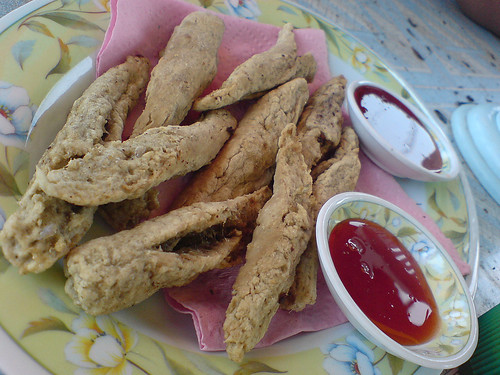
I do wonder how much does it take to get the certification to the point that an ordinary hawker has to close shop. According to the e-halal portal, applicants have to list all the ingredients used in their food preparation before proceeding with the application.
As an example, the keropok lekor seller will list the fish, oil, flour and other ingredients used in making his delicacy. I'm unsure what other details are needed since any applicant who wants to use the portal must first register with Jabatan Kemajuan Islam Malaysia (JAKIM).
Would the cost of submitting this information and other checks be so exorbitant that the trader has to close shop? Or is it only the big businesses that can afford the certification.
I have always had more faith in the small traders as some of them are my neighbours and friends. I've seen them prepare the food and know where they get the supply. I'm uncertain what actually happens during the certification process such that only big businesses can afford the checks.
As I said, how much exactly does it cost to get the certification?
Image from knizam
Tuesday, July 03, 2012
Housebuyers in China are spoilt for choice

The catch is buyers will have to purchase a RM10mil residence in China to get their free luxury home valued at RM500,000 in Malaysia. I guess if you can afford a RM10mil home, RM500,000 is just peanuts.
Those who have made it to the rich league in China are definitely a sought after group. This might just be a sampling of other schemes that will entice the newly rich to part with their money. Malaysia is not complaining of course since we get the benefit of these foreign funds coming onto our shores.
What might be of concern is the impact on the local home buyers. How many can afford houses in the RM500,000 price range? That price range is not in the average income earner's horizon in the immediate future.
Affordable homes are getting fewer in number especially in the urban areas. Wage earners save and tighten their belt to buy their dream home. Sometimes the goal posts are changed just as the buyer nears his target.
The influx of foreign buyers indirectly makes house prices rise even higher. Higher and higher it goes until locals will be left with just crumbs. That is a depressing scenario indeed.
The news item that appeared in the Star, 3 July 2012 is shown below:
BUY a house in China and get one free in Malaysia.
Developers are using this innovative marketing approach to boost property development in both countries, Nanyang Siang Pau reported.
However, buyers will have to purchase a RM10mil residence in China to get their free luxury home valued at RM500,000 in Malaysia, the paper said.
The local developers would maintain and rent out the property for the foreign owners and, at the same time, help them apply for the Malaysia My Second Home programme.
Many Chinese developers have purchased a large number of properties in Malaysia, which they give away as gifts to customers who buy houses worth between RM10mil and RM20mil.
Image from piz013
Monday, July 02, 2012
All the best to Firefly

I've always believed that we need competition in order for incumbents in any industry to give better value to consumers. The consumers are the ones who made certain brand names what they are now and any upstart to their dominance is not a threat but more of a challenge.
The proof of a great organisation will always be shown when it manages to bring its own services to the next notch in attracting customers. Sometimes when success gets to your head, we tend to forget the basics and ride roughshod on others.
When Firefly started, no one gave it a second chance as AirAsia was the leading low-cost carrier at that time and still is now in the region. No one expects Firefly to be in the same league as AirAsia but at least consumers have another choice when making decisions. The recently aborted share swap and consolidation plan between MAS and AirAsia put Firefly in a tight spot.
AirAsia for all its strengths must acknowledge that the field is wide enough for another carrier to enhance services that can be provided to travellers. Remember when AirAsia started and took over the rural services in Sabah and Sarawak? That was a big mistake as the AirAsia setup was not capable to cater for the different needs of those in the rural areas.
That is a different segment altogether and there should be more flights from the Peninsular to Sabah and Sarawak. We must not be taken hostage by flight cancellations or delays. As consumers we must be vocal that we need those services or else how do we even bridge the gap between the two. The internet might be a solution but there is nothing like actual face to face communications.
In that sense Firefly feels a void where consumers are concerned. I hope Firefly will be another success story for the nation in the steps of its big brothers, MAS in its heyday and AirAsia.
Image from flylcct
Sunday, July 01, 2012
Another plan to ease the burden of the poor from our benevolent government

The subsidy is only for a year and those entitled to the bus tickets have to struggle again after that period ends. This is definitely a temporary measure and does not go to the roots of the problem. The people are still poor and cannot even afford the bus fare.
Should not the adage, teach them how to fish and not just give the fish be the mantra? Or are we kept in the dark on some future plans that has been approved to upgrade the livelihoods of this group of people?
The full news item that appeared in the Star 1 July 2012 is below:
KOTA BARU: The federal government is giving away free Cityliner stage bus tickets, worth RM1.6mil, to the poor and needy in Kelantan for a year beginning this month.
International Trade and Industry Minister Datuk Seri Mustapa Mohamed said the programme was the first ever implemented in the country to help ease the burden of the targetted group.
Under this programme, 10,000 pre-paid tickets for the Cityliner stage bus service would be distributed to the poor and needy, including persons with disabilities (OKU), single mothers and orphans, in Kelantan every month, he told reporters after the launch of Cityliner's first eco-friendly bus in Kelantan here on Sunday.
Cityliner, which runs the stage bus owned by Konsortium Transnasional Berhad (KTB), has a fleet of 150 buses operating in Kelantan. About 20,000 people use the bus service daily.
Mustapa, who is also Kelantan Umno liaison chairman, said the Social Welfare Department would determine those eligible to receive the free bus tickets. - Bernama
Image from abgteror
Saturday, June 30, 2012
Smartphones can reveal secrets

I guess the lovers were in such a passionate moment that she did not realise that her phone was nearby. The lovers did not plan their time together in detail and did not cover all possibilities. Most probably the thrill of being caught might even have a role here. Unconsciously perhaps, the wife wanted to be found out and it is her way of informing her husband that their marriage is not what it used to be.
In a way, this is quite a good advertisement for smartphones. It shows how easy it is to dial a number when we have a smartphone even when we are in the throes of passion. It is also a reminder to anyone that the phone should not be too near you while engaging in something that should be a private affair in case you accidentally dialled a friend or family member. Unless of course you purposely want your love-making to be made public.
Another astounding fact from this particular story is the excuse that the lover gave when caught in the closet. The lover told the police he was visiting the woman, an old friend, and had gone into the closet to masturbate when she was having a shower.
Can anyone beat that as an excuse?
The full news item taken from the Star 30 June 2012 is below:
A NEWLY-WED woman in Taiwan accidentally dialled her husband's number on her touch-screen smart phone as she was having sex with her lover, just in time for the husband to hear her breathing heavily on the line, reported Kwong Wah Yit Poh.
The husband, only known as Zhang, rushed home after he received the call at work, thinking that his wife could be in trouble.
However, the engineer was shocked to find his wife sitting on their marital bed only in her undergarments. The blanket was also missing.
The wife told Zhang that she had taken off the bed linens to wash them and was about to take a shower.
Suspecting something amiss, Zhang searched the house and found a man, wrapped in the blanket, inside the guest room closet.
“My heart was broken,” he said, adding that he had seen the man's photo in his wife's Facebook profile.
He later lodged a police report.
At the police station, Zhang's wife claimed that the man was merely visiting as she was going for a shower after cleaning the house.
The lover meanwhile told the police he was visiting the woman, an old friend, and had gone into the closet to masturbate when she was having a shower.
Image from clker
Tuition's importance in the Malaysian education system

Those are my thoughts after reading the news item below from the New Straits Times, 29 June 2012.
The government has approved an allocation of RM2 million from a special fund to implement the interactive 1Malaysia People's Tuition programme (iTR1M) to give free tuition to 10,000 students in Selangor who will be sitting for public examinations this year.
Prime Minister Datuk Seri Najib Tun Razak launched the programme implemented by the Malaysian Teachers Foundation Berhad (YGBM) at Seri Perdana, here, today. Also present was YGBM chairman Tan Seri Alimuddin Mohd Dom.
Alimuddin said the pioneer project, implemented in Selangor, would benefit poor students who could not afford to attend private tuition classes but would be sitting for the UPSR, PMR and SPM examinations this year.
"The iTR1M programme will help boost the academic performance of students from low income families to achieve excellence in the examinations," he told reporters after the launching ceremony.
Alimuddin said the programme which started on June 18 and will end in October, was implemented in 107 schools, namely, 30 secondary schools and 77 primary schools in Selangor.
He said 350 teachers from the schools concerned would give tuition in Bahasa Malaysia, English, Mathmetics and Science every Monday, Wednesday and Friday.
"The aim of the iTR1M programme is to give free guidance outside of school hours for children of low income earners from the various communities and help them optimise the use of the 'Netbook 1Malaysia' and ICT facilities provided by the government," he said in a statement.
Alimuddin said under the programme, UPSR candidates used the learning and self-evaluation method online from houses, schools and community centres (Rural Libraries, Community Broadband Centres and rural information hubs).
He said for PMR and SPM candidates, conventional guidance in several selected secondary schools would be held from 3pm to 5pm on Monday, Wednesday and Friday.
Furthermore, he said SPM candidates sitting for pure sciences (Biology, Chemistry and Physics) would use the learning and self-evaluation method online from home.
"Preparatory seminars and workshops to face the examinations would be held towards the dates of the examinations," he said.
Image from dreamstime
Thursday, June 28, 2012
Watch out for termites if you save your money at home

The fact that we have not had anyone losing their money in such a way is proof of how much we trust our banks. Some might say there may be people who do keep their money outside the banking system and as far as we know they have not lost that money to insects or other natural calamities. That is food for thought.
In Malaysia we are assured of the safety of our deposits through the auspices of the deposit insurance system administered by Perbadanan Insurans Deposit Malaysia (PIDM). Aren't we glad that we can sleep peacefully knowing that our savings would not disappear overnight even if a member bank fails.
This insurance does not give carte blanche to the banks to do business recklessly. As a business entity we are certain that commercial banks would prefer to see continued growth rather than sudden dramatic spurts which ends with a big flop.
We are however uncertain of the human factor. Those in management might prefer the spurt and flop scenario in order to line their own pockets. It is tempting to make the hay while the sun shines. We are fortunate that our central bank is always vigilant and banks that show anomalies will be investigated and remedial action can be taken.
We have to emphasise to those who doubt the credibility, trustworthiness and strength of our banking system that what we have in place is well-managed and has the full support of the government and people. Our deposits are tiny compared to savings worldwide but account holders need not have any doubts that their money is in safe hands.
We do not need to stash our savings in our own house.
Image from dreamstime
Wednesday, June 27, 2012
The DBP should not be an enforcement agency

That division of roles should remain so that the DBP can concentrate on its objectives to promote the language and its use. DBP must maintain its advisory role and not be the judge, jury and prosecutor in one swoop. Education will always be the best way to promote the language and DBP's research department must continue to develop the language in all sectors. The onus is on the DBP to be more aggressive in promoting the correct usage of the language in all spheres of life.
The most common misuse of the language is the regular habit of literal translation of terms from a foreign language. This contributes to miscommunication as the intended message is not conveyed properly to its target audience. The DBP is always there to help or advise but most of us take the language for granted, giving rise to a hybrid version of the language.
The cyberworld has exacerbated this trend when a mixture of Malay and other languages are strung together in a sentence. All thoughts and desires tend to use a short form as time is of the essence in today's world. How often do we use grammatically correct sentences when using facebook or twitter?
In the name of saving space, we sacrifice the beauty of the language. DBP might be able to take a proactive action by encouraging the usage of for example, the pantun as that form of the language can be succinct and to the point. Pantuns are open to so many possibilities and those who are adept will be able convey a myriad of emotions in just a few words. Saves a lot of space and time.
Image from streetdirectory
Tuesday, June 26, 2012
Will other convicted rapists follow asking for maximum sentence?
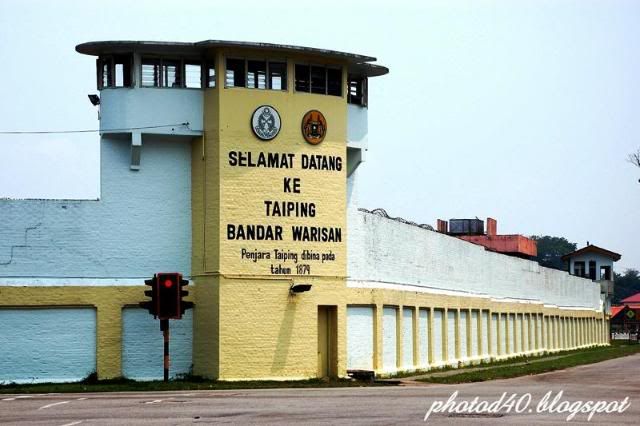
The judge in this case sentenced the man to a 20 year sentence in jail and 10 strokes of the rotan. The jail time is to run consecutively from the current jail time.
The man will serve a total of 70 years in jail and as he is now 35 years old, the chances of him being a free man again seem quite slim. That would at least keep him from repeating his crime on others. He said that his crime cannot be forgiven and we do not actually know why he has made this conclusion only after repeated offences.
How many other rapists have come to their senses and realise that the crimes they committed have long-term effects on the victims. In this case, at least the rapist will be able to reflect again on what happened in the past and might be able eventually to come to terms himself. He as the aggressor would never be able to amend or turn back the clock for the victims.
The victims who are reading the news on his plea for the maximum sentence would be able to heave a sigh of relief that at least the perpetrator will be behind bars for a very long time. The psychological scars might still be present and they would still need the emotional support and assurance from those close to them.
One rapist behind bars for a long time does not guarantee that the crime will not occur again. We must still be vigilant and on alert as potential perpetrators are always present to pounce on unsuspecting victims. I doubt S. Thiyagaran's example will have any effect on potential criminals as those who want to commit a crime especially rape will not give a second thought when they feel the urge to do it.
Image from photod40
Monday, June 25, 2012
SPAD is doing a 'good' job

Any loyal Malaysian would take offence at the insinuation conveyed by the last paragraph in the letter to the editor today “One wonders whether this is due to SPAD being too skilful in the art of quantitative management, the enforcement personnel having vision defects, or practise of the culture of “semangat tolong-menolong.””
How could the writer say such things? All of us know those who worked at the SPAD since its inception have been trying hard to make the life of a commuter much more pleasant. The Land Public Transport Commission (SPAD) has been entrusted in improving road and rail-based public and freight transport in the country. The heading in their website shouts out that the SPAD is to lead the transformation of public transportation to become the rakyat's preferred mode to commute.
The rakyat would be the ordinary folks and not those with the outriders or even the SPAD management. That distinction has to be made clear from the beginning. The commuters are those lucky enough to be under the care of the SPAD. At the time of writing, many do spend a few hours every day commuting to and from work. The transformation of our public transport system overseen by the SPAD will take time to bear fruit and in the meantime we should all be thankful that our roads are still packed with many cars that has just one occupant.
One bus can accommodate at least 30 passengers and is equivalent in length to two or three cars bumper to bumper. That one bus does take up space when the car is much more deserving. More cars is a sign of progress, right? Buses inadvertently are always the first choice for some. It does not matter that some of our buses can be a furnace in a heat wave when the air-conditioner breaks down or we can play dodge the dripping water from the roof top when it rains as this is just a temporary nuisance. The SPAD has so many plans in the pipeline that will make commuting such a pleasure in future.
The recently announced Teksi Rakyat 1Malaysia scheme will definitely change the face of the industry and we will be the envy of the world. The days of rude, unresponsive and picky taxi drivers will be past history. Welcome to better public transportation and many thanks goes to the SPAD. Don't forget this is for the rakyat and please remember that in this Orwellian world, there are rakyats and there are rakyats.
Image from SPAD
Subscribe to:
Posts (Atom)